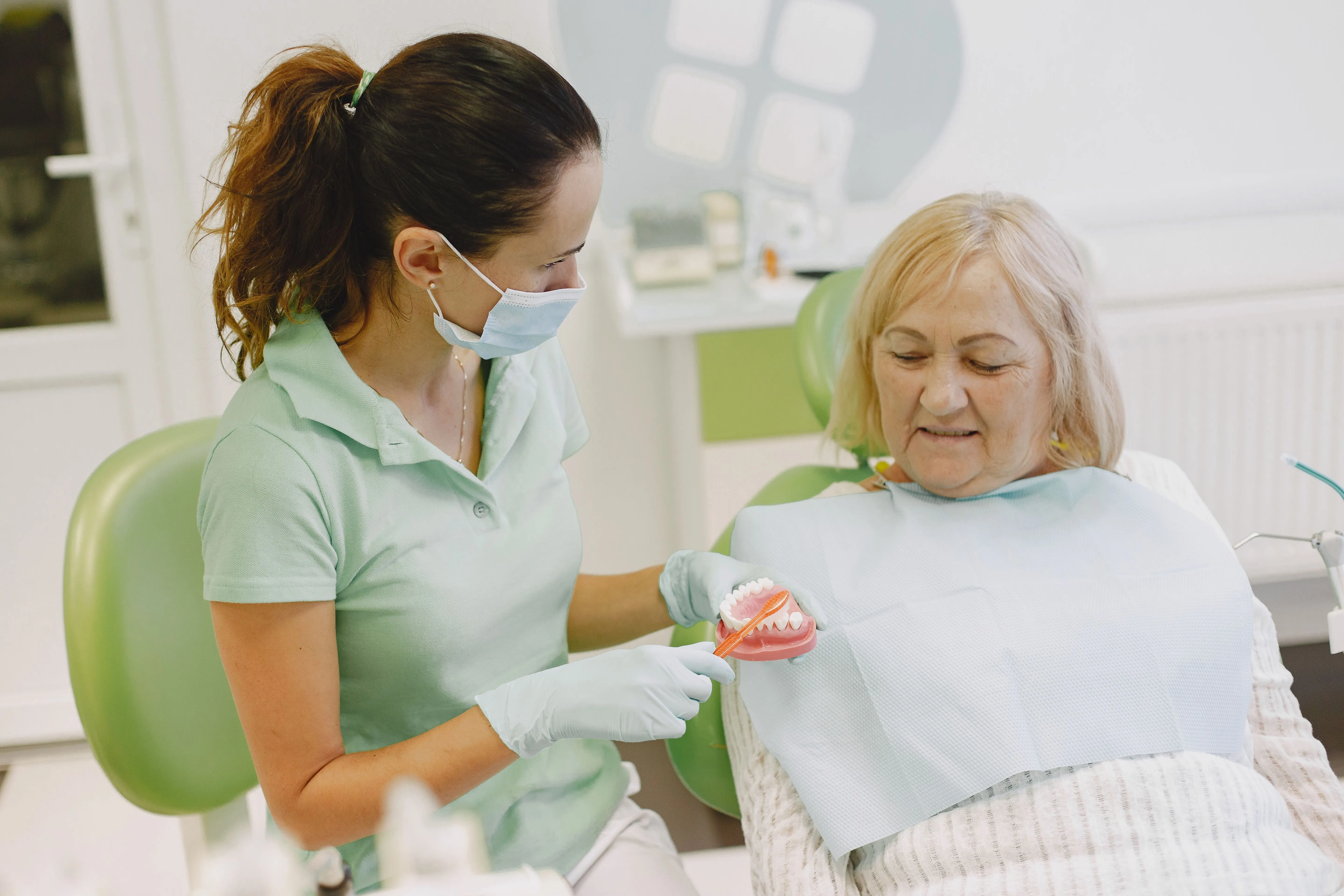
There's no single best way to replace a missing tooth — only the best way for your mouth, your budget, and what you want out of the next twenty years. Implants, bridges, and dentures each solve the problem differently, with real trade-offs between them. Here's an honest, side-by-side look from the team at Dental Wellness, so you can walk into your consultation already knowing what to ask.
An honest comparison from the team at Dental Wellness
Missing teeth rarely come with a manual. Most patients we see have heard of all three options — implants, bridges, dentures — but nobody's actually sat down and explained what separates them beyond price. So here's that conversation.
Dental Implants
What they are: A titanium post placed into the jawbone, capped with a crown once healed. It functions as an artificial tooth root, not just a replacement tooth.
The upside: Implants are fixed, don't move, and don't rely on neighbouring teeth for support. Because the post integrates with the bone, they stimulate it the way a natural root does, which prevents the bone loss that follows tooth loss with other options. With proper care, the implant itself can last a lifetime.
The trade-off: Higher upfront cost, and the process takes longer — typically a few months from placement to final crown, to allow the bone to fuse with the implant. Not every patient has enough bone density straight away, though techniques like All-on-4 have made this less of a barrier than it used to be.
Best suited to: Patients who want a long-term, low-maintenance solution and don't want healthy adjacent teeth altered.
Dental Bridges
What they are: A false tooth fused between two crowns, which are fitted over the natural teeth on either side of the gap. The whole structure is cemented in place.
The upside: Bridges are fixed rather than removable, faster to complete than implants (often within two to three appointments), and generally less expensive upfront than implants. They work well for replacing one or two teeth where the neighbouring teeth are already strong.
The trade-off: The teeth supporting the bridge need to be shaped down and crowned, which permanently alters teeth that may have been perfectly healthy. The bone under the missing tooth still isn't stimulated, so some shrinkage continues underneath the false tooth. Bridges typically need replacing after ten to fifteen years.
Best suited to: Patients missing one or two teeth with strong, healthy teeth already either side of the gap, who want a fixed solution without the implant timeline.
Dentures
What they are: A removable appliance replacing some (partial) or all (complete) of the teeth in an arch, held in place by suction, the shape of the gum, or clasps onto remaining teeth.
The upside: Lowest upfront cost of the three, no surgery required, and can be made relatively quickly. A reasonable option when several teeth are missing and other treatments aren't affordable or suitable right away.
The trade-off: Dentures can shift while eating or speaking, need adhesive for some patients, and come out at night for cleaning. Because they sit on the gum rather than replacing the root, the underlying bone continues to shrink over time, which means dentures typically need relining or remaking every five to eight years as the fit changes.
Best suited to: Patients replacing multiple or all teeth in an arch who want the lowest upfront cost and are comfortable with a removable appliance.
The Question That Actually Matters
Most patients ask "which is best" when the more useful question is "which fits my situation." A patient with one missing molar and strong teeth on either side has different priorities than someone who's lost most of their teeth over a decade of dentures that were never quite comfortable. Bone density, budget, how many teeth are involved, and how much you value not touching your remaining natural teeth all point in different directions depending on your case.
The only way to answer it properly is a consultation with a scan, not a general comparison chart. That's true even of this one.